
One photo, one 3D model with odd eyes, and a 44 second reel that sells 3D avatars to personal trainers.
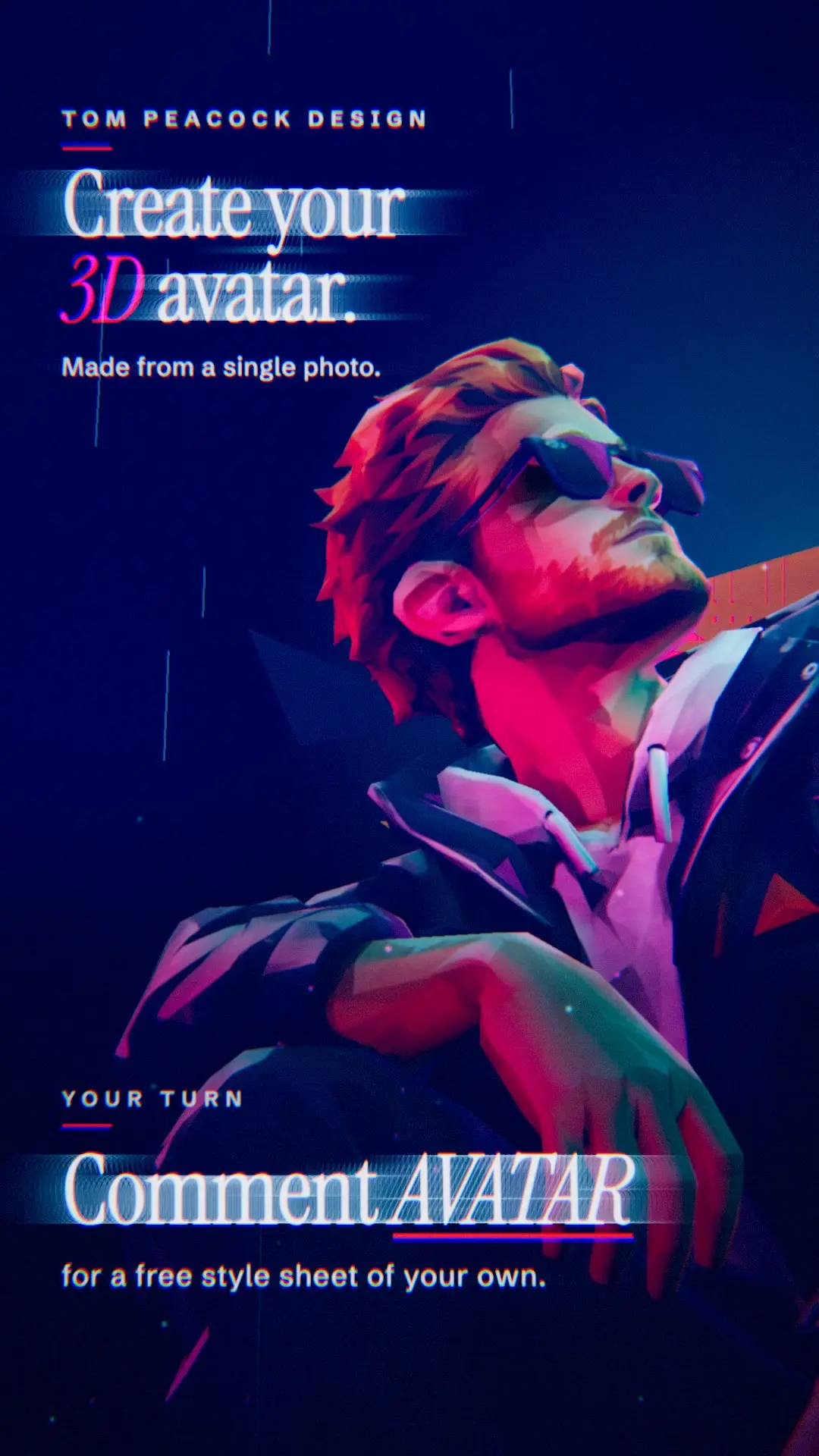
Personal trainers live on their face: their app, their socials, their website. The idea was to sell them something nobody else on their feed has, a 3D avatar of themselves, and to do it with one reel at the very top of the funnel.
The catch: there was one 3D model to show for it, made from Tom's own photo. So the reel had to work as a concept and a first product at the same time, and make one model look like a range.
The whole offer in three steps, and the line the reel opens on. Step through it.
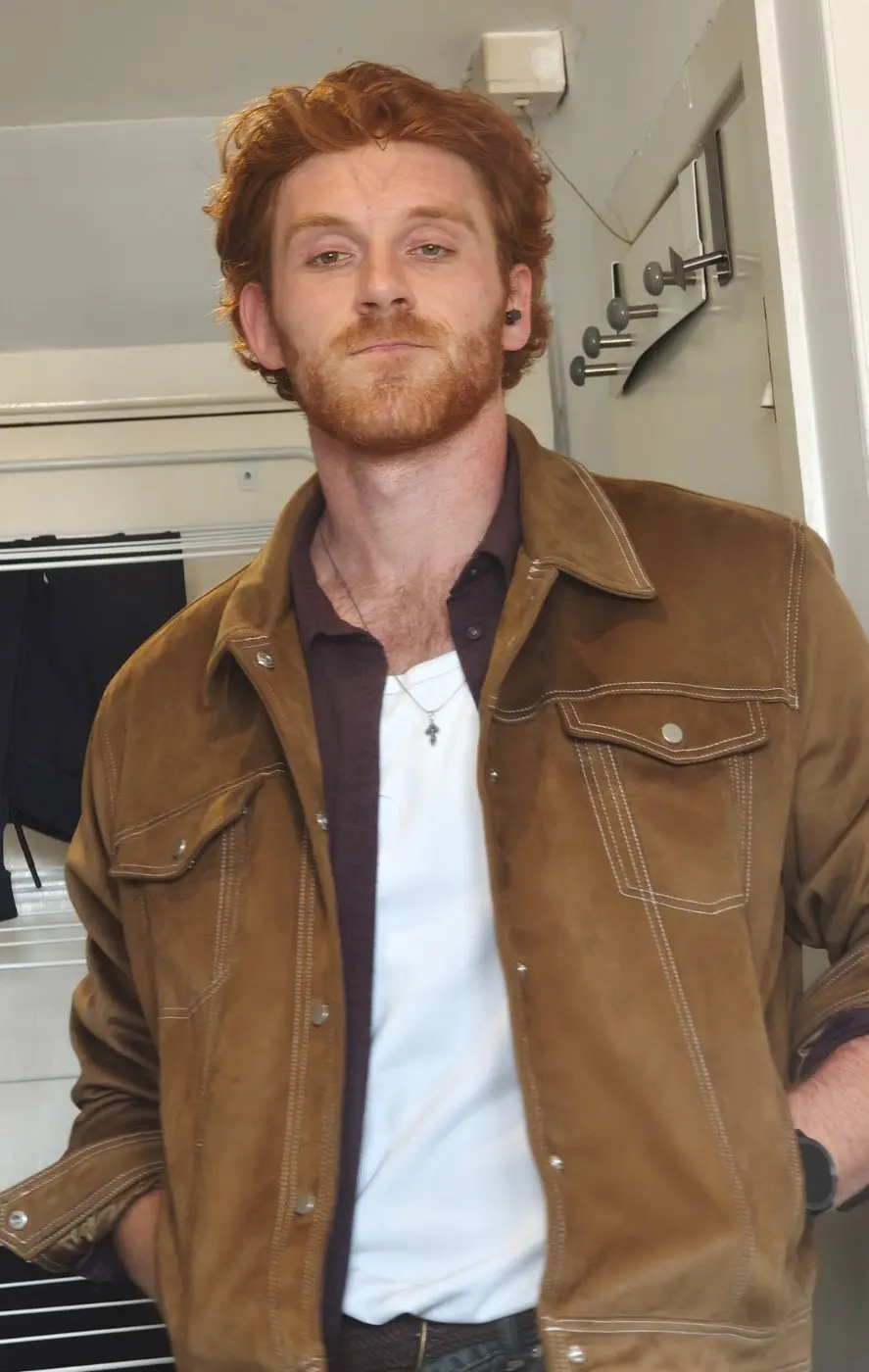
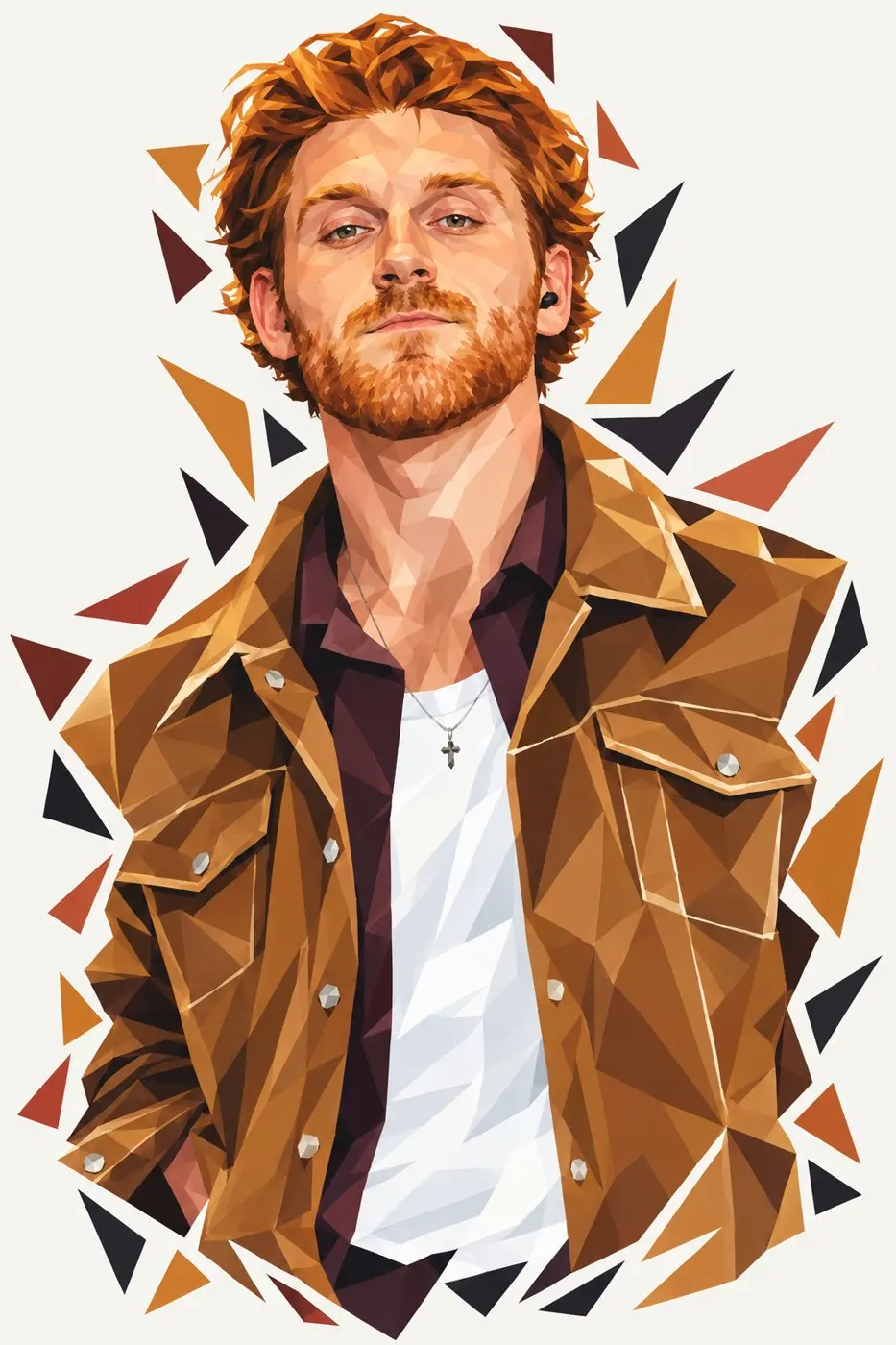
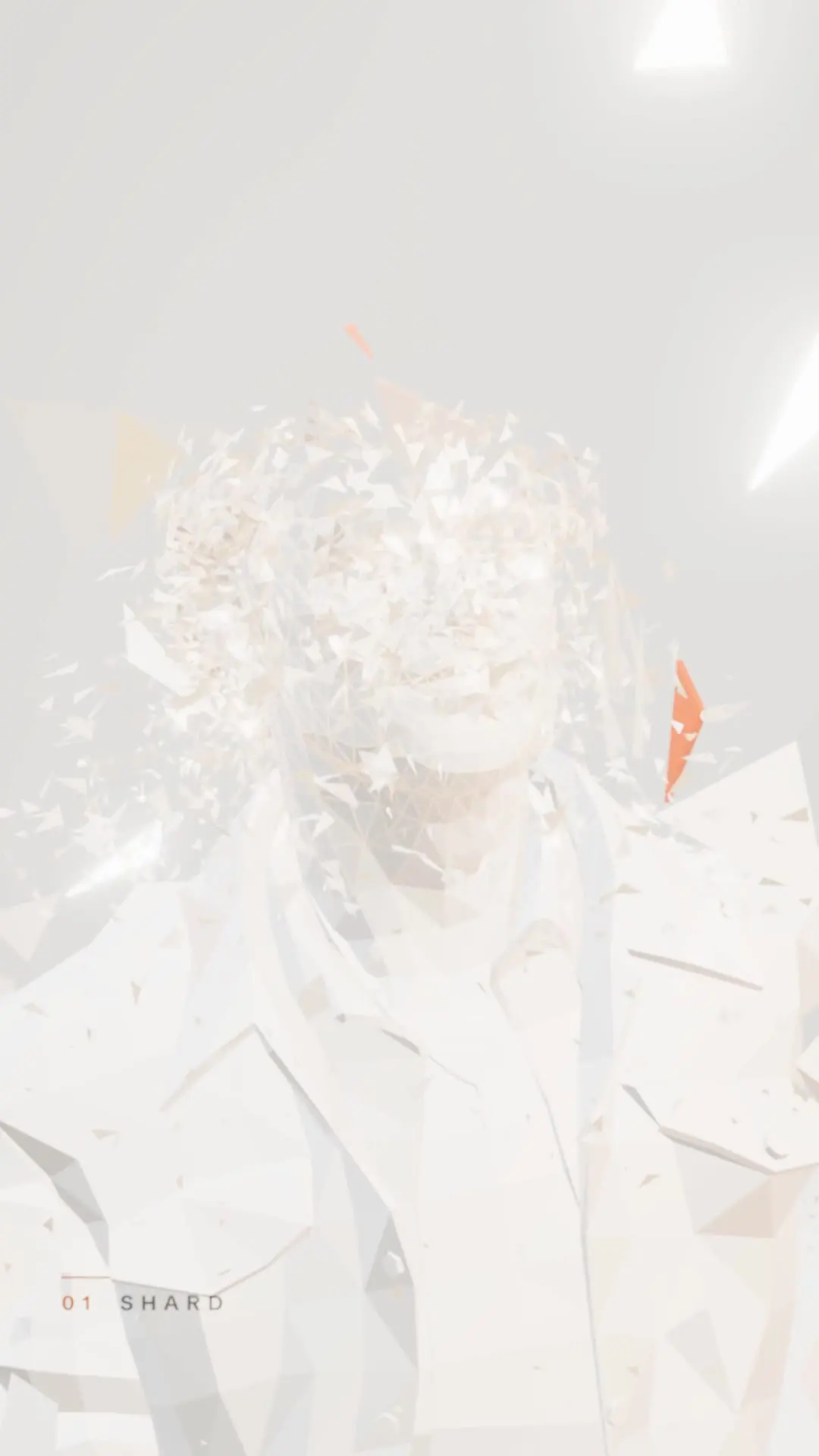
The model looked like Tom everywhere except the eyes. They sat slightly wrong, and on a face, slightly wrong is the first thing anyone sees.
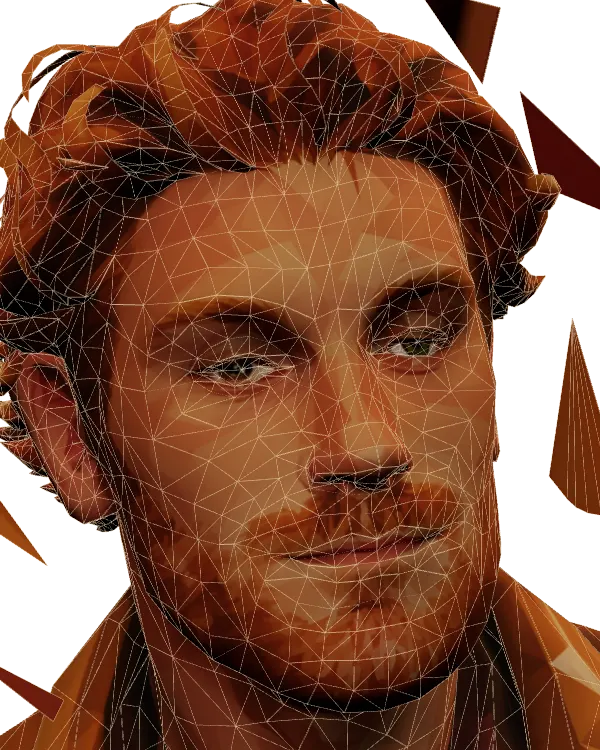
The first fix was a warp tool: drag a handle round each eye and the mesh and texture move together, so the eyes could be spaced apart a touch. It worked in principle, but the face is low-poly. Under the texture, each eye is only a handful of triangles, so any move big enough to help pulled whole triangles and creased the face. Drag across the picture to see the mesh.
So the problem became the idea. Shades cover the eyes, and every client gets a signature piece. The glasses went from a patch to the hero object.
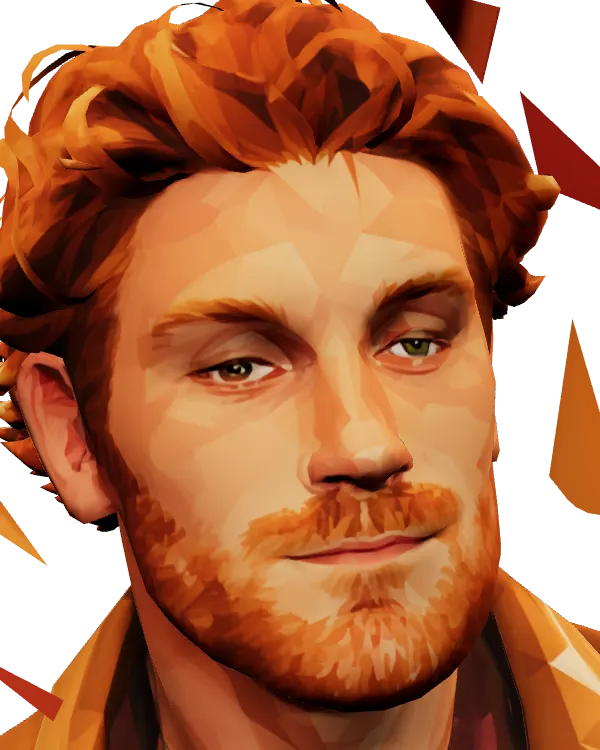
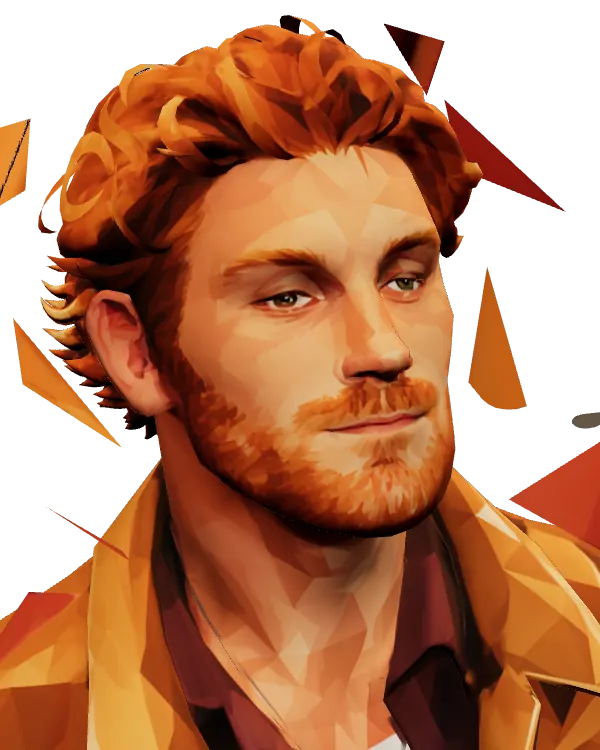 Drag to turn
The same model and the same light, turned through the angles the reel uses. The turn stops short of his right side, where the jaw reads heavier.
Glasses that float, clip or tilt the wrong way give the whole thing away. Getting them to sit like real glasses took three passes.
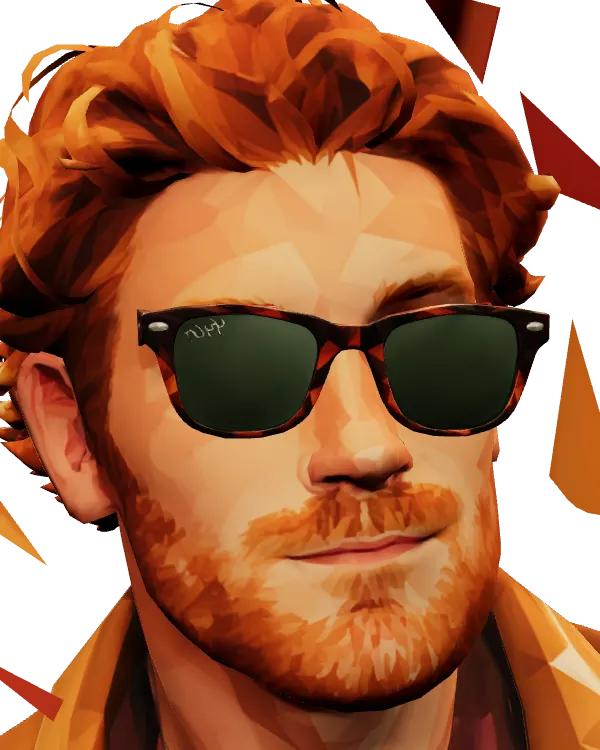
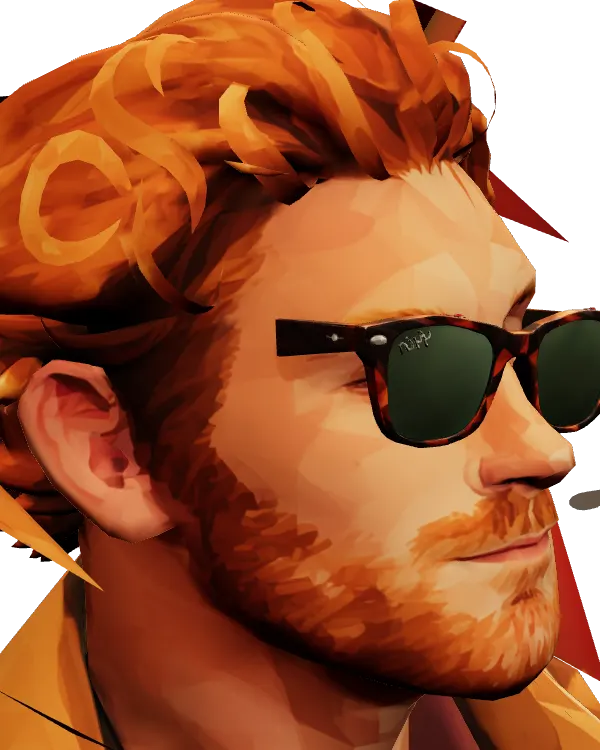
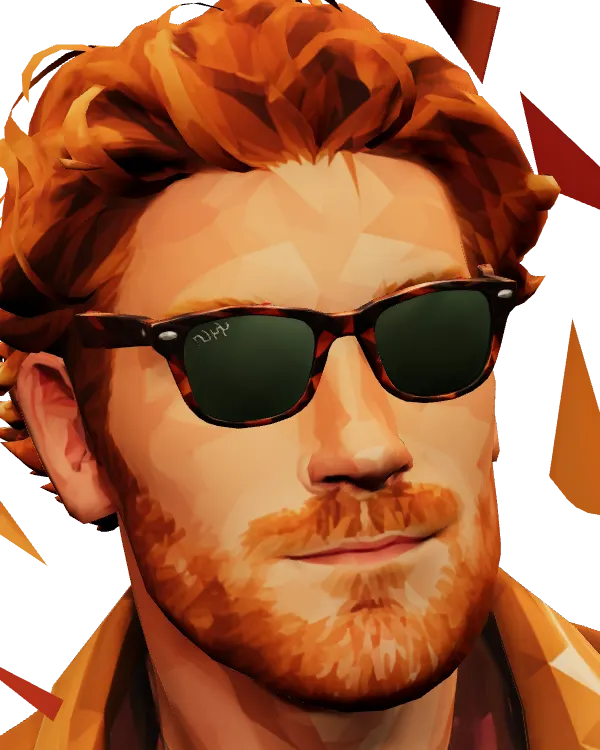
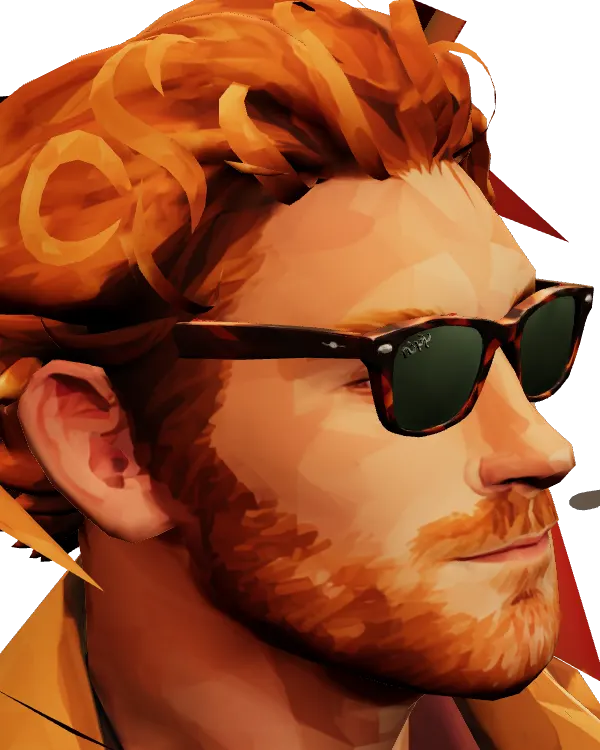
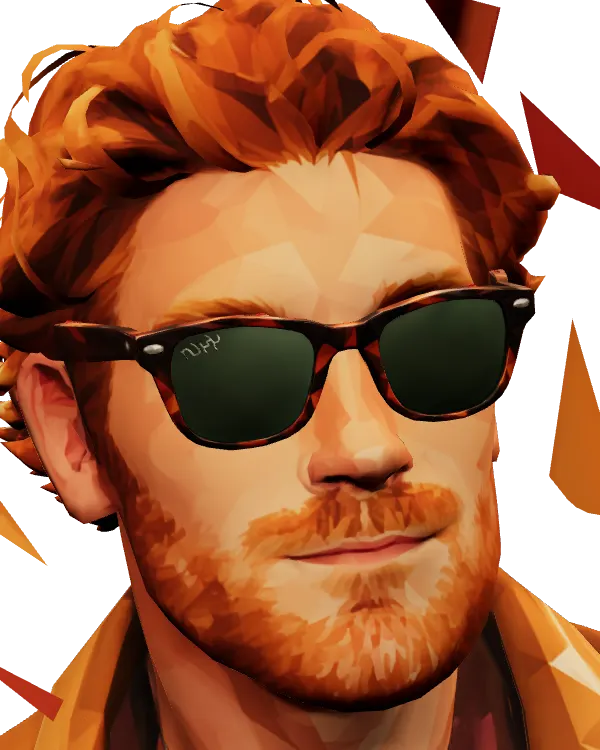
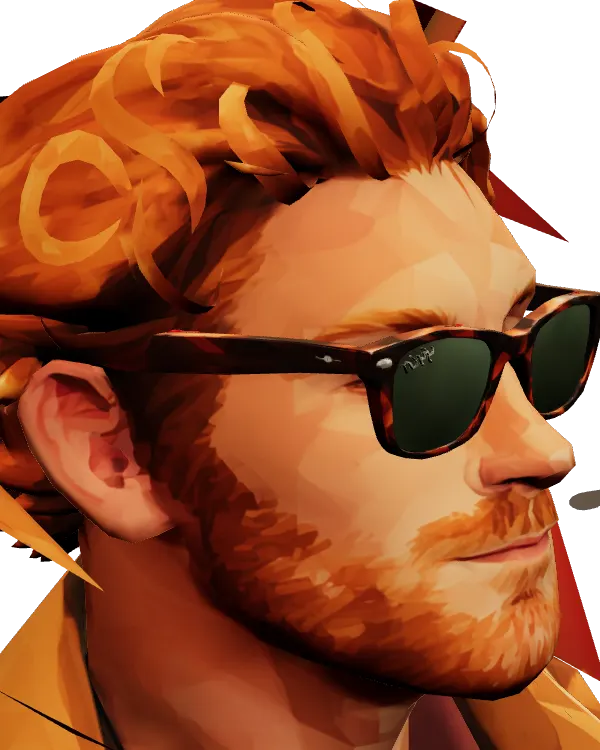
Dropped on square to the world. The head is rolled and turned, so the frames sit crooked and the arms stop short of the ears.
Measured off the face mesh: the head is rolled about 7° and turned about 5°. The frames follow that, sit smaller, and the arms are opened out to reach the ears.
Then Tom placed them himself in a little placing tool, with move, rotate and scale handles and live numbers. His fit went into every shot.
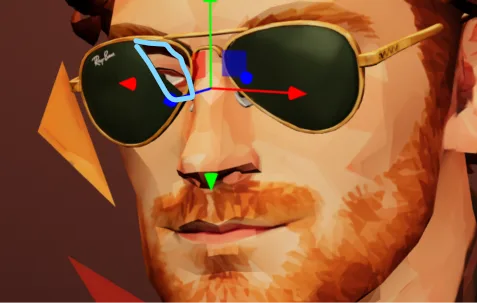
Look 01 swapped to gold aviators. The model came with a web of faces filling the gap at the bridge. Cutting them out also cut a hole in one lens (circled), so the lens was rebuilt from the mirrored outline of the other one. The placing tool got an aviators mode, and Tom saved a fit for them too.
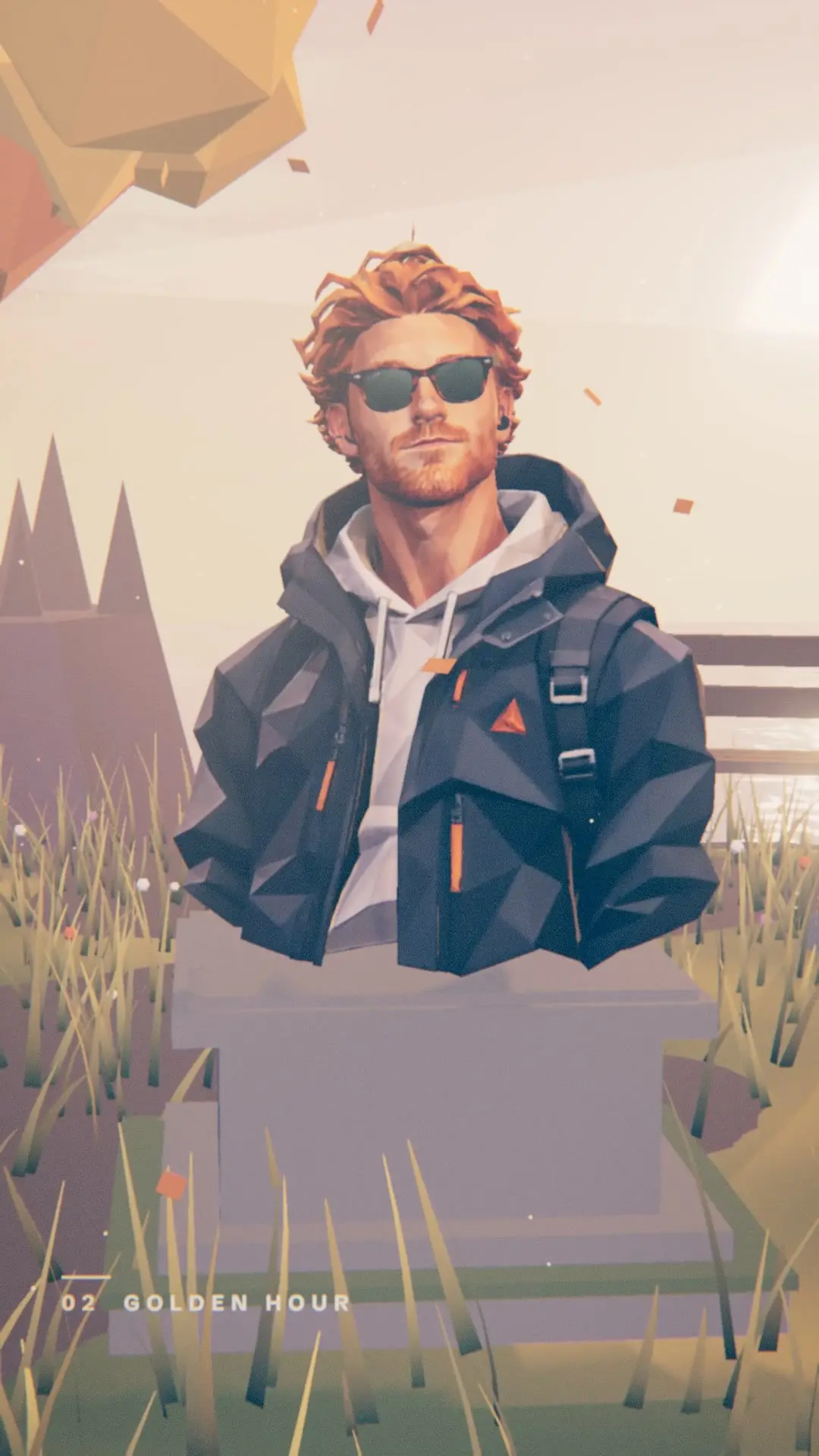
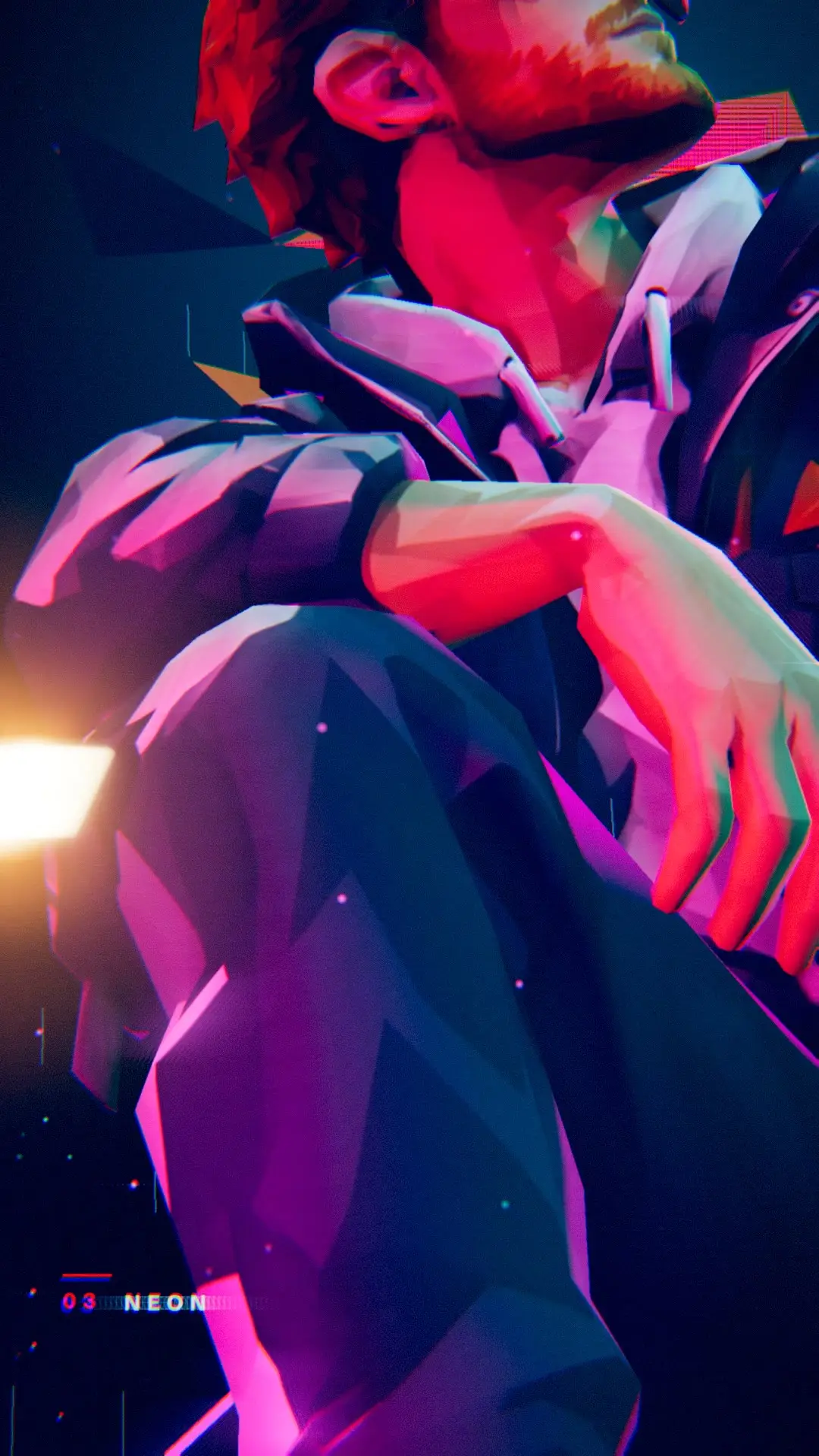
By now there were three models: the portrait, a hooded bust and a crouching full body. Each got its own world, and each world was shaped round what that model could and couldn't do.
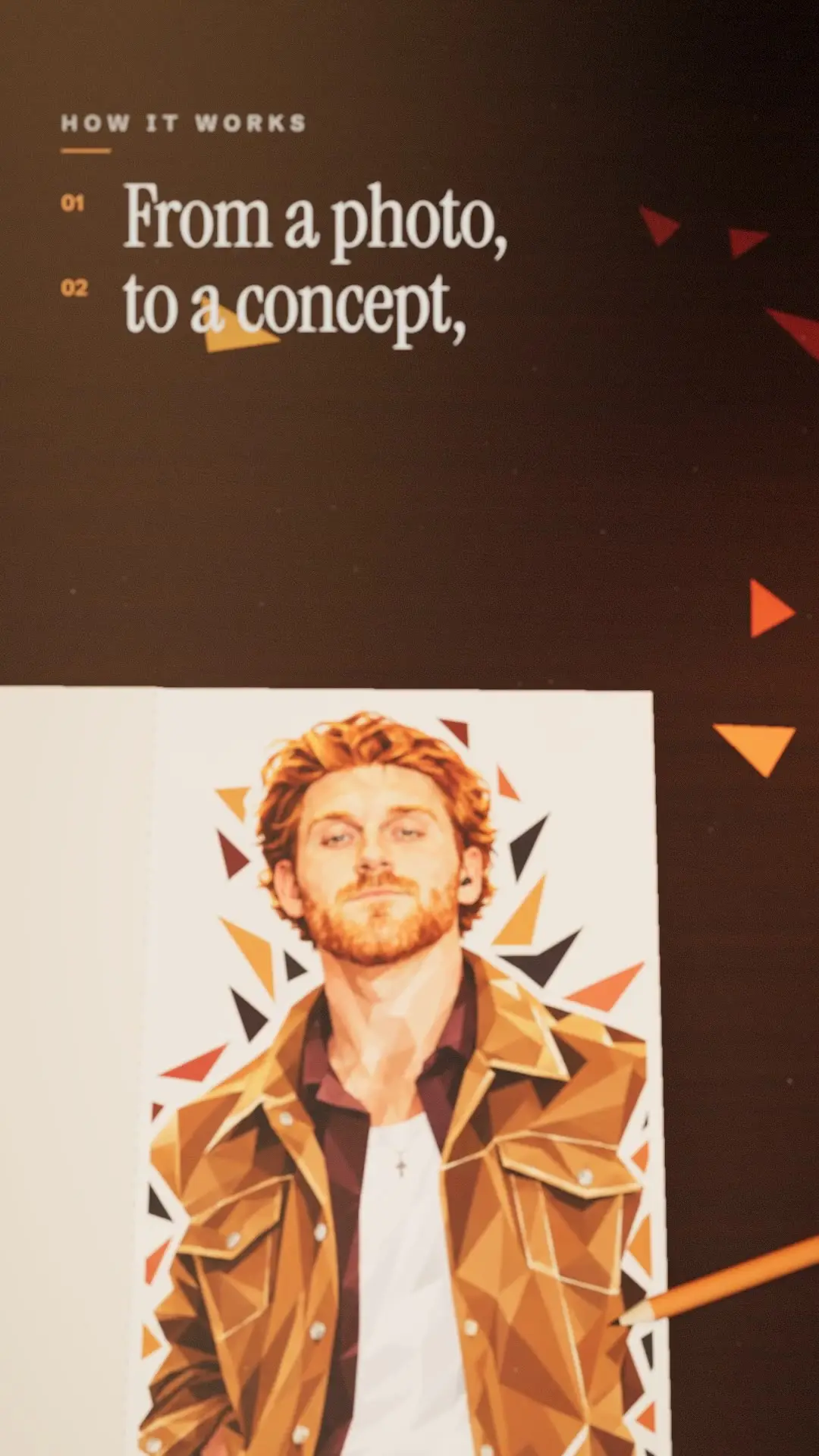
The photo sits on a walnut desk under a lamp. The page curls over to the concept, then the camera pushes into its face and dips into look 01.
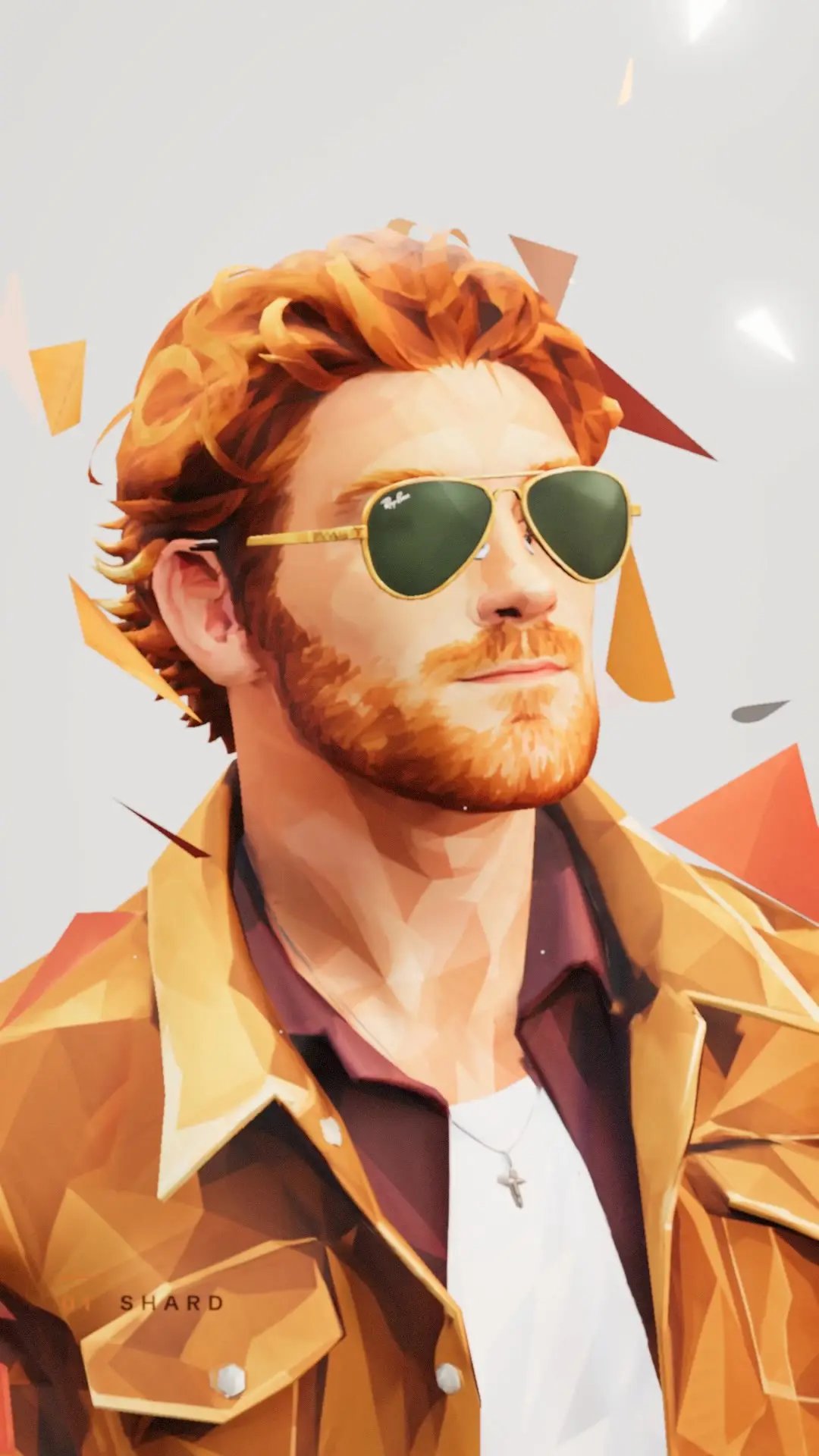
The on-brand light void. The bust builds from flat, faceted shards with a half-second orange flash on each edge as it locks in, then the aviators build, then the texture sweeps up over both.
A painted, Life is Strange style evening: the whole bust on a stepped plinth at a cliff edge, with long grass, an autumn tree, a bench and a lighthouse.
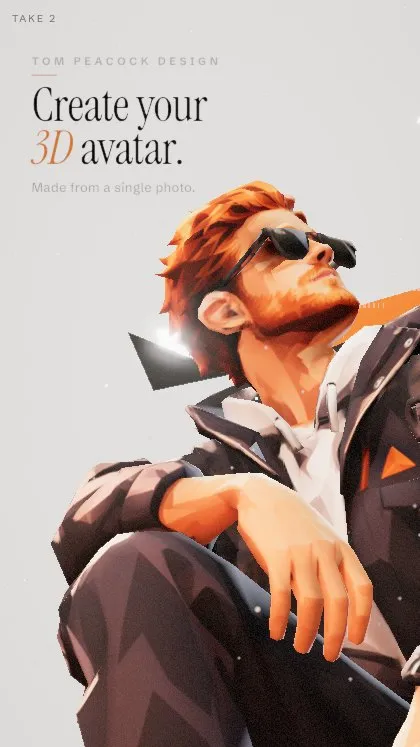
A cyberpunk void with magenta and cyan rim light, haze, light shafts and a neon wall, then the "Create your 3D avatar." header behind him and the call to action.
Describing a camera move in words only gets so close. So the film got a director mode: orbit freely, scrub the timeline, set a key, move the cut, and click on the face to place the shadow. Tom set five keys and a cut at 8.75s, and from then on his version was the default.
The same went for the header. It sits behind his head, so he cuts in front of the type like a magazine cover. The first line was too much about Tom and not enough about the viewer:
Be the face they stop for.
Create your 3D avatar.
Made from a single photo.An invitation, not a boast.
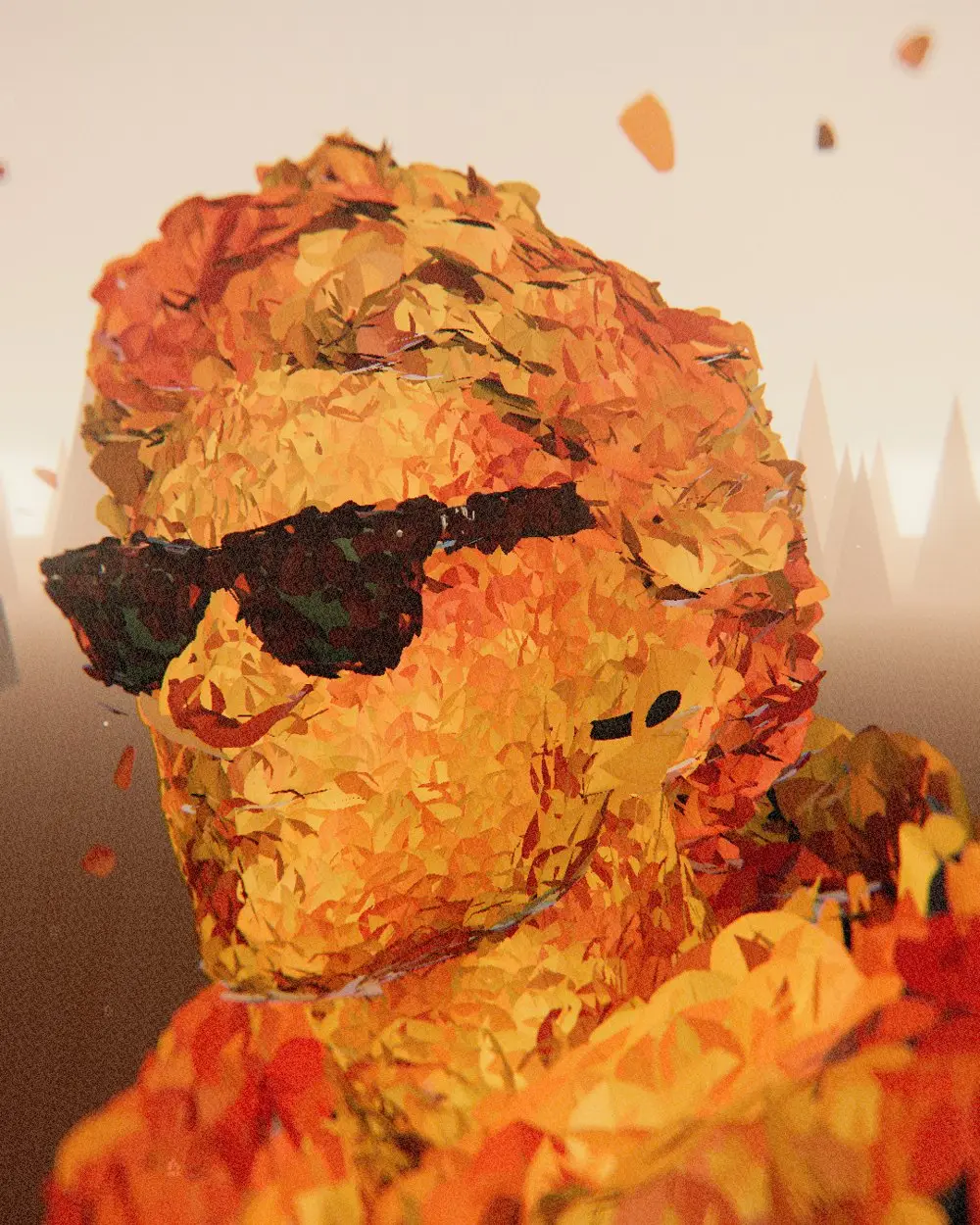
A side test that ran alongside the reel: build the hooded bust out of autumn leaves, then let them fall away to reveal the model. Five rounds of notes turned it into its own Instagram story.
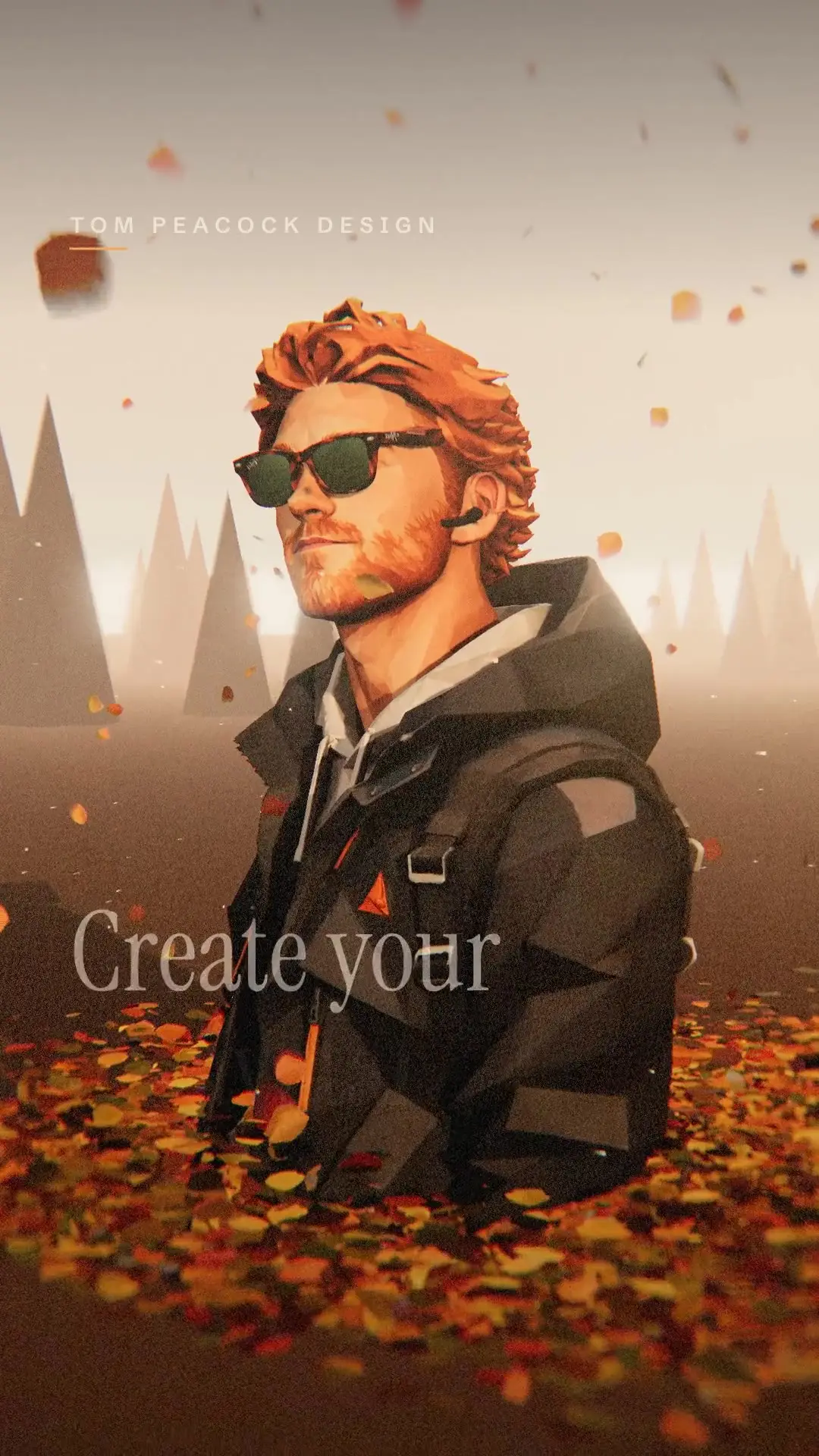
Drag through the finished 18 second story. The leaves whip up round him, settle into his shape, burst off and drift to the ground.
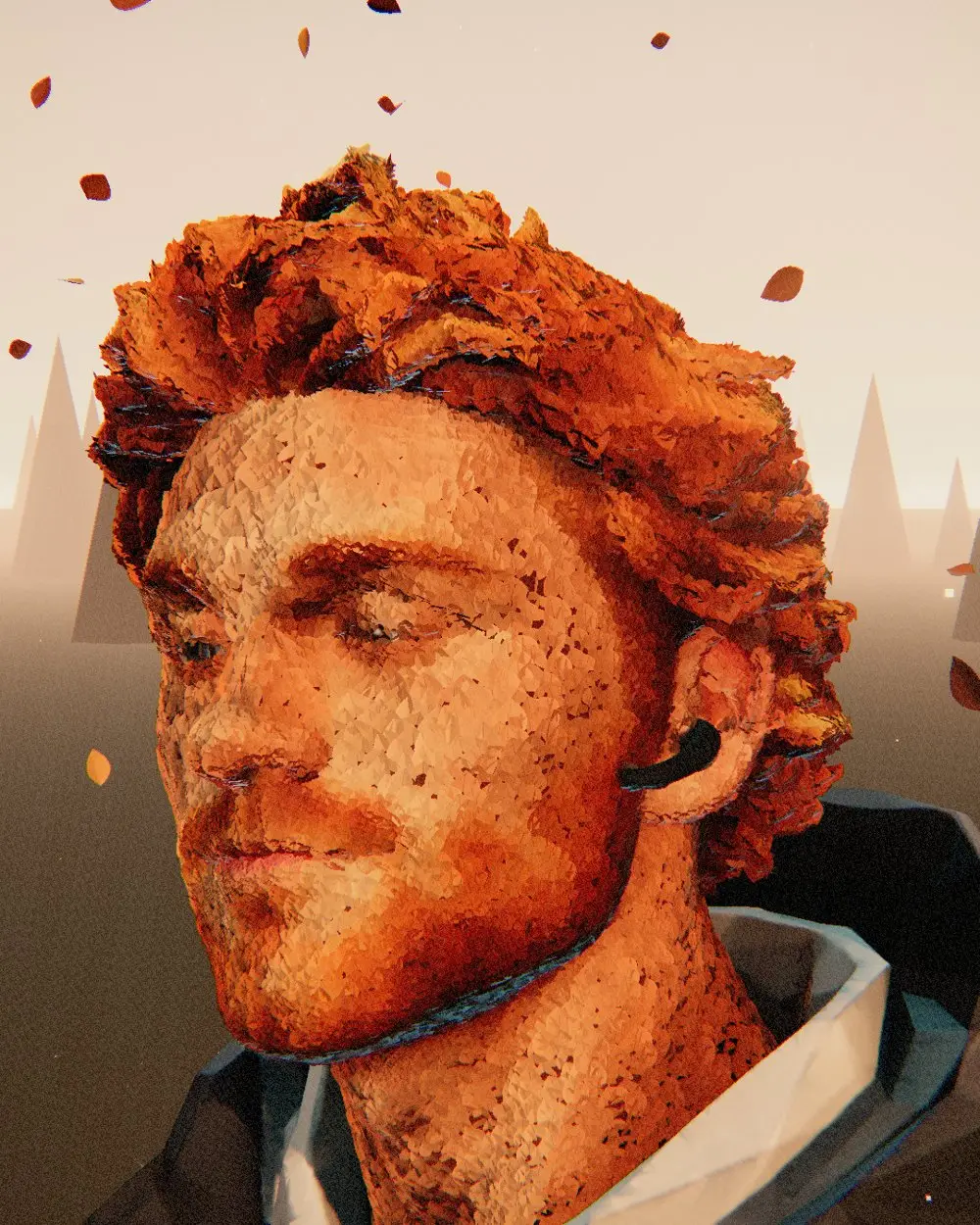
About 34,500 small leaves, each taking its colour from the texture where it sits. Smaller leaves round the eyes and mouth keep the likeness.
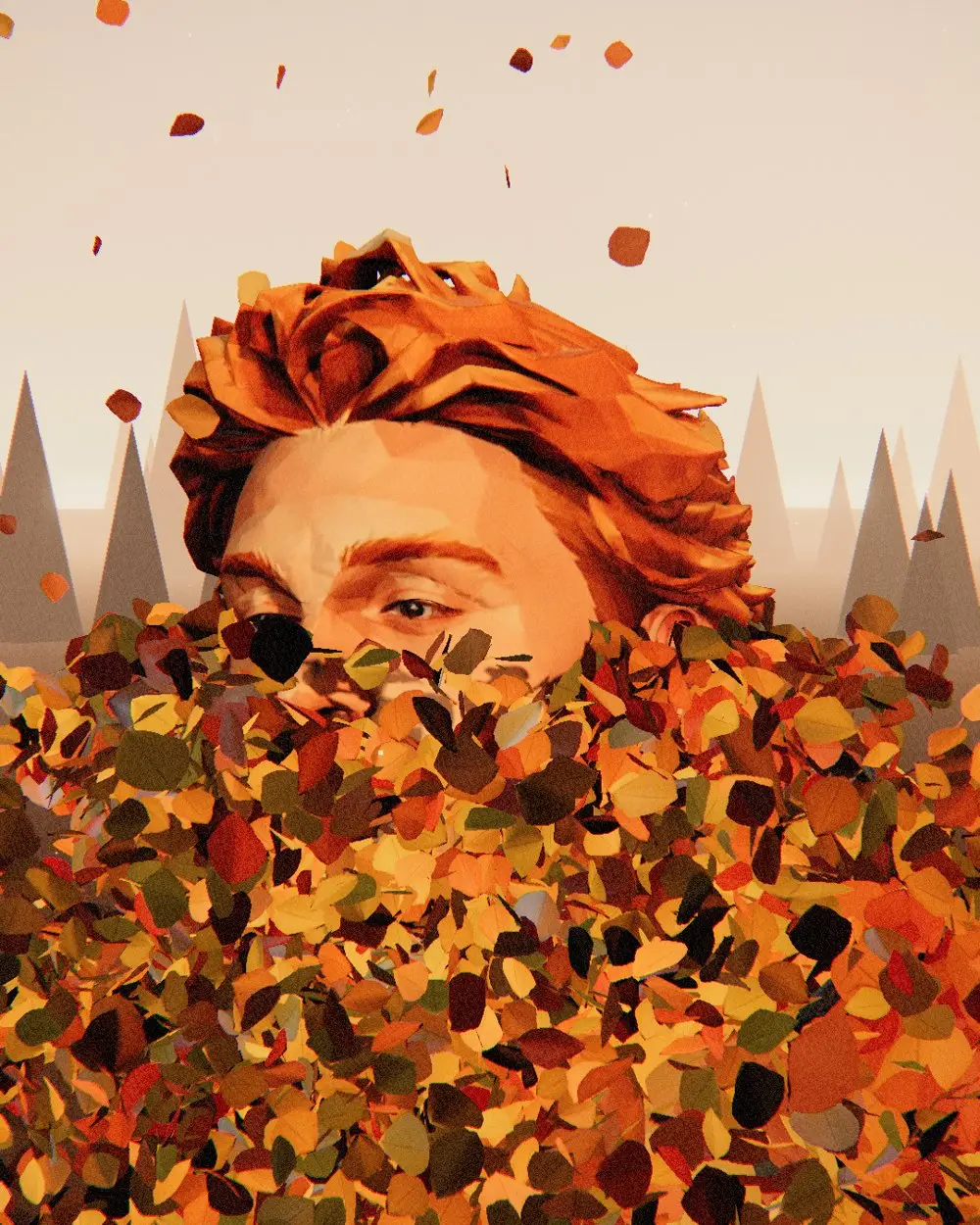
About 9,800 bigger leaves in reds and golds cover the whole bust, then fall away top-down to reveal the model.
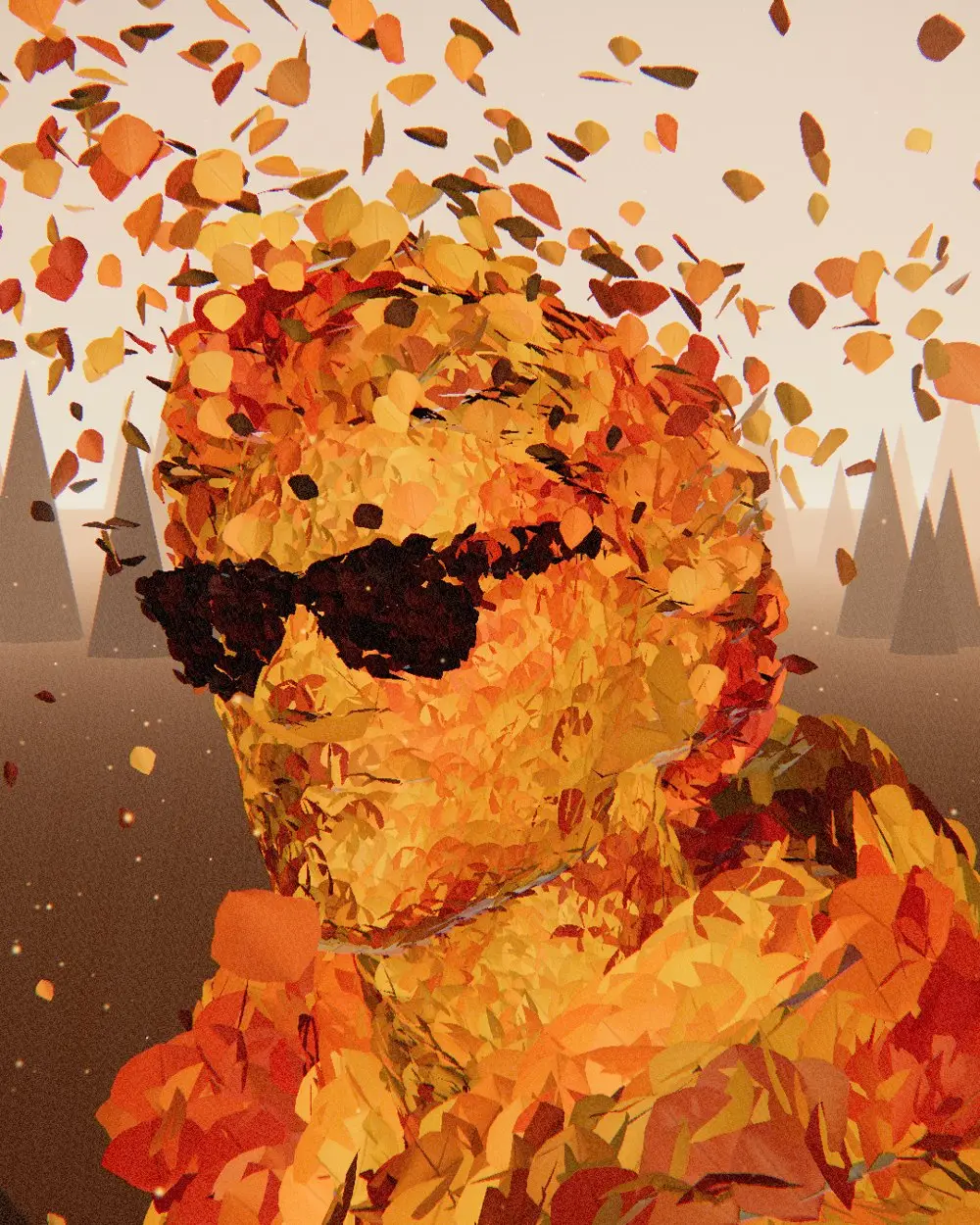
A whirlwind gathers them, glowing amber in flight. They fall like real leaves, swinging and rocking. The shades come back, built in dark leaves.
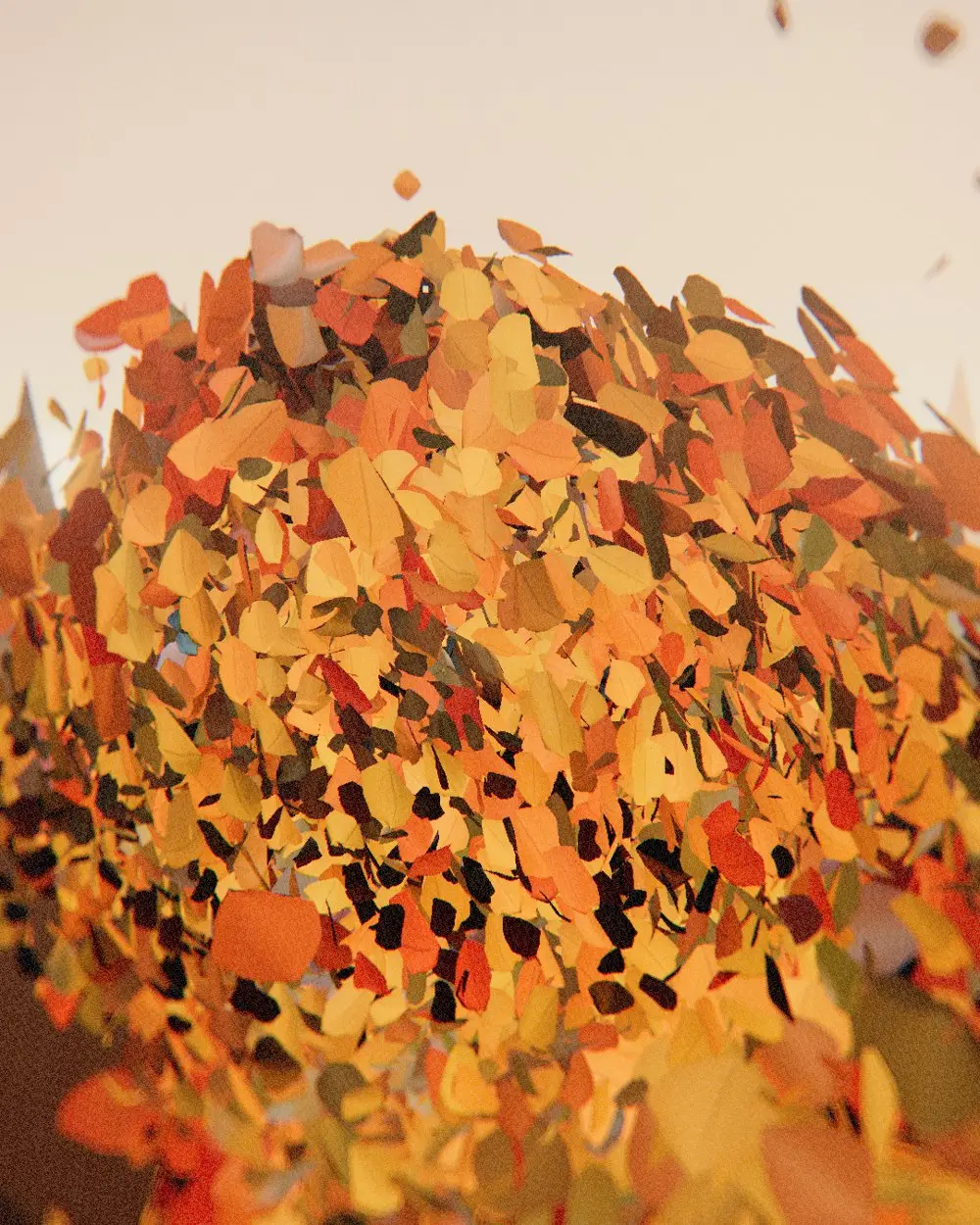
A fast burst into slow motion, curved flight paths, per-leaf motion blur and light trails, which also hide the gaps between leaves.
Sliders for the swirl and the fall that Tom tuned and saved, plus a camera track: round him as it builds, close on the bust, out on the burst, back to the face.
Everything above runs live in the browser. For the final cut, every frame was stepped and saved one at a time at full phone resolution, so nothing drops or stutters. With no graphics card on the render machine, that meant about five seconds a frame on four CPU cores.
The last four seconds hold on the final shot with the call to action: comment AVATAR for a free style sheet of your own. That comment starts the funnel: a style test made from their photo, then a call.
Send one photo. You'll get a style test back before anything is built.
Start with a photoTell me the idea in a sentence. I'll come back with how it could look, how it would work, and what it takes to get it live.